




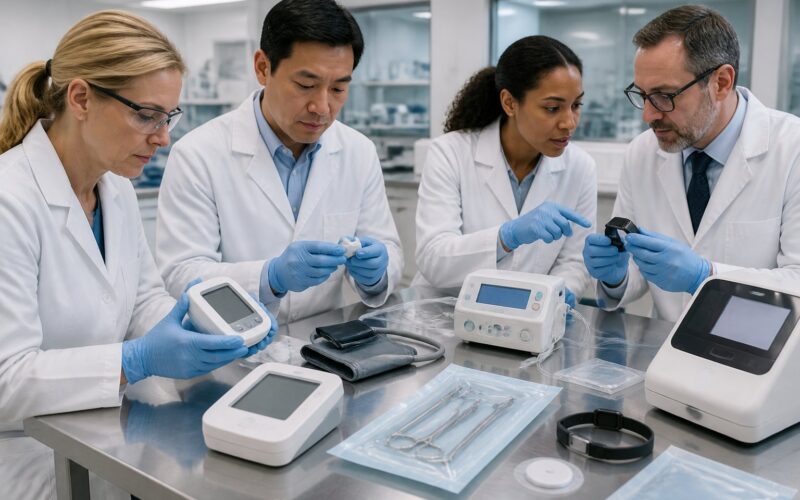
Medical devices are everywhere in healthcare, from the most basic bandages to those complicated pacemakers that keep hearts ticking. In the United States, the Food and Drug Administration (FDA) acts as the main regulator of medical devices, handling everything from initial approval to ongoing safety checks.
The FDA regulation of medical devices sits on a framework that’s been around since 1976. Its goal is to protect public health but still let innovation happen.
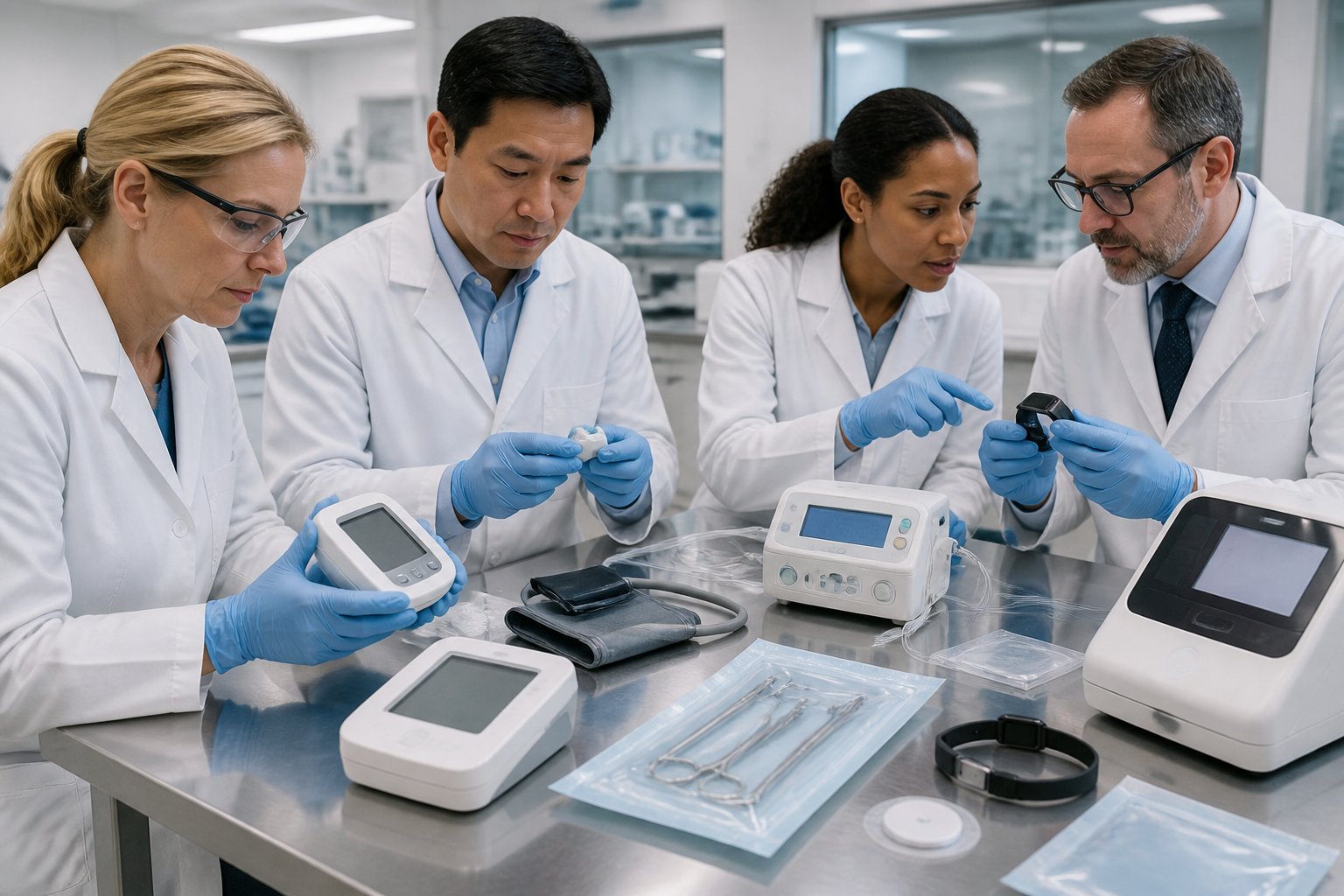
It’s worth knowing who’s in charge of these products, whether you’re a patient, doctor, or someone making devices. The regulatory system shapes which devices make it to the market, how fast new treatments come, and what kind of safety standards are in place for you.
Different medical device classifications mean different levels of scrutiny, depending on how risky the device is.
Outside the U.S., every country pretty much has its own regulatory setup. The global regulation of medical devices varies by region, but there are international efforts trying to bring standards closer together.
Key Takeaways
- The FDA regulates medical devices in the United States using risk-based classifications and review pathways.
- Manufacturers have to meet quality standards, register their facilities, and report safety issues for the whole lifespan of a device.
- International regulators use different systems, but global harmonization is a goal to help align safety rules across borders.
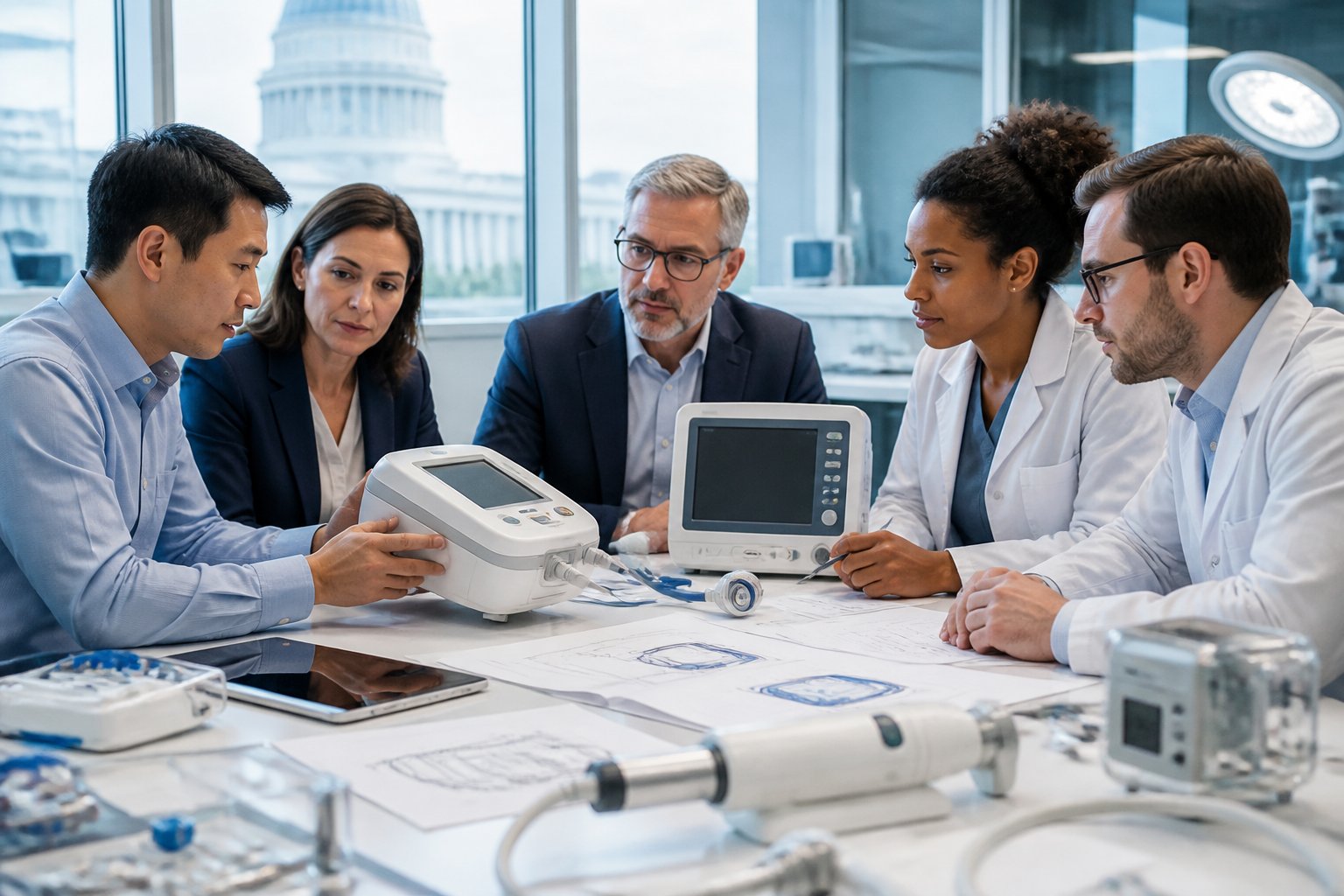
The Food and Drug Administration is the main authority on medical devices in the U.S. The Center for Devices and Radiological Health is the division that manages the daily details.
These agencies work under federal law to keep you safe when using medical products.
FDA’s Statutory Role Under Federal Law
The Food and Drug Administration regulates medical devices thanks to powers granted by Congress through the Federal Food, Drug, and Cosmetic Act. This law lets the FDA demand premarket review, set safety standards, and enforce rules across the industry.
The FDA is part of the Department of Health and Human Services. Devices have to meet federal requirements before manufacturers can legally sell them in the U.S.
Their authority covers everything from simple thermometers to MRI machines. The Code of Federal Regulations, especially 21 CFR, holds the detailed rules manufacturers have to follow.
These rules lay out testing, labeling, and quality control requirements.
What the Center for Devices and Radiological Health Oversees
The Center for Devices and Radiological Health (CDRH) regulates medical devices as the main division within the FDA for this product category. CDRH reviews applications for new devices, keeps tabs on devices already on the market, and steps in when safety problems show up.
This center deals with a huge workload. The CDRH approved 1,145 medical devices in recent years, which shows just how many products are entering the system.
CDRH’s main jobs:
- Premarket review of device applications before sale
- Post-market surveillance to see how devices perform
- Recall coordination when devices are risky
- Compliance enforcement against manufacturers who break the rules
They also regulate products that emit radiation, even if they’re not technically medical devices.
The FDA and CDRH have the main authority, but other federal agencies support medical device oversight. The Federal Trade Commission checks advertising claims that device companies make to you.
State health departments enforce FDA rules in their own states. They inspect facilities and look into complaints about devices sold nearby.
The Department of Health and Human Services sets overall policy for health agencies, including the FDA. When agencies need to work together on device issues, this department gets them talking.
Professional medical boards and accreditation groups add more standards on top of FDA rules. They don’t regulate directly, but their requirements often shape what devices you’ll find in clinics.
How Device Type, Intended Use, and Risk Determine Oversight
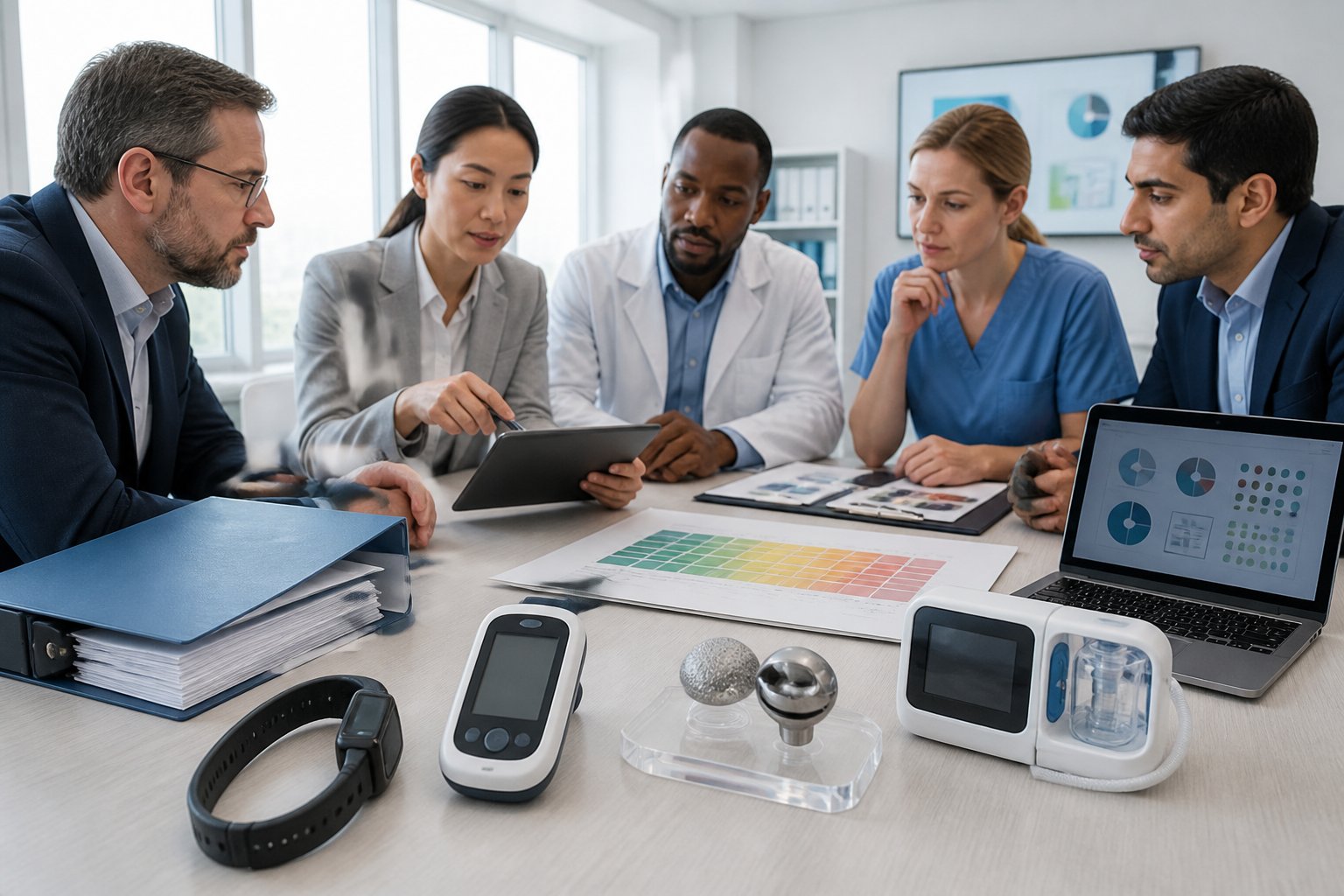
Medical device regulation depends on what a device does and how risky it is for patients. The FDA uses a three-tier system, sorting devices by intended use and potential harm.
The FDA Definition of a Medical Device
The FDA says a medical device is an instrument, machine, implant, or similar item that diagnoses, treats, prevents, or affects the body’s structure. Drugs work by chemical action, but devices don’t.
A device’s intended use decides if it falls under FDA regulation. The intended use describes what the device is designed to do and which conditions it addresses.
The FDA checks how you market the product and what claims you make about what it can do.
Software can count as a medical device if it performs medical functions. Blood glucose monitors, pacemakers, surgical tools, and diagnostic imaging equipment all fall under FDA rules.
Class I, Class II, and Class III Device Classification
The FDA puts each device into one of three classes based on risk level. This changes how much review your device needs before it hits the market.
Class I devices are the lowest risk. They only need general controls like good labeling and manufacturing. Think bandages, exam gloves, and simple surgical tools.
Class II devices have moderate risk and need general controls plus special controls. Special controls add extra safety through performance standards and post-market checks.
Most Class II devices go through 510(k) clearance, showing they’re similar to an existing device. Powered wheelchairs, infusion pumps, and pregnancy test kits are in this group.
Class III devices support or sustain life, prevent serious health issues, or carry a high risk of illness or injury. These face the strictest oversight because of the significant risks associated with Class III devices.
Heart valves, implantable pacemakers, and breast implants need premarket approval with clinical trial data.
Special Considerations for SaMD and In Vitro Diagnostics
Software as a Medical Device (SaMD) covers software that does medical tasks without being part of hardware. Mobile health apps that diagnose conditions or calculate drug doses count as SaMD and need FDA review.
The FDA is still figuring out how AI challenges medical device regulation since these products can change their behavior with machine learning. Your SaMD’s classification depends on how important the info it provides is and the clinical situation.
In vitro diagnostic devices (IVDs) analyze samples like blood or tissue outside the body. These devices help diagnose disease, monitor health, or guide treatment.
IVDs use the same three-class system but have unique requirements for performance validation.
Premarket Pathways Before U.S. Marketing
The FDA asks most medical devices to go through specific approval routes before you can sell them in the U.S. The path depends on risk level and whether similar devices already exist.
510(k) Clearance and Substantial Equivalence
The 510(k) clearance is the most common route for medical devices coming to the U.S. You need to submit a premarket notification showing your device is substantially equivalent to one already on the market.
Substantial equivalence means your device has the same intended use and tech features as a predicate device. You have to show your device is as safe and effective as the predicate.
The FDA usually reviews 510(k) submissions within 90 days. You can use bench testing, performance testing, or sometimes clinical data for comparison.
This pathway works for moderate-risk Class II devices and some low-risk Class I devices that aren’t exempt.
Premarket Approval for High-Risk Devices
Premarket approval (PMA) is the strictest route the FDA uses. You have to use this for high-risk Class III devices that support or sustain life.
The PMA process requires a lot of clinical data proving your device is safe and works. You can’t just show it’s similar to something else.
Only about 2% of medical devices approved in the last 10 to 12 years have gone through PMA, but these are the highest-risk products.
Your PMA application needs to include all studies, including bench and clinical work. The FDA does a thorough scientific and regulatory review before giving the green light.
De Novo Classification for Novel Devices
The De Novo pathway is there for low to moderate-risk devices with no predicate. You use this if your device is new but doesn’t need the full PMA process.
You can submit a De Novo request if the FDA has already turned down your 510(k) because there’s no similar device. Or you can go straight to De Novo if you know nothing like it exists.
The FDA looks at your device’s risk and decides what controls it needs. Once approved, your device becomes a predicate for future 510(k) submissions.
This pathway is getting more important for new technologies.
Research, IDEs, and IRB Review
An Investigational Device Exemption (IDE) lets you run clinical studies in the U.S. before marketing approval. You need an IDE when your clinical investigation might put patients at significant risk.
Your IDE application has to explain the device, how it’s made, and your clinical plan. An Institutional Review Board (IRB) must review and sign off on your study to protect patient rights.
The IRB keeps an eye on your study the whole way through. You need to collect clinical data that follows Good Clinical Practice guidelines.
This data backs up your 510(k) or PMA application to prove safety and effectiveness.
Humanitarian Device Exemptions for Rare Conditions
The Humanitarian Device Exemption (HDE) pathway helps bring devices to market for rare diseases or conditions affecting fewer than 8,000 patients a year in the U.S. You only need to prove safety and probable benefit, not effectiveness.
Your HDE application has to show the device doesn’t pose unreasonable risk. You also need to prove there aren’t comparable devices and that making the device wouldn’t be profitable through standard routes.
Devices approved this way can only be used in places with IRB approval and patient consent.
Manufacturer Registration, Listing, and Quality Requirements
Medical device manufacturers must register their facilities with the FDA and keep up solid quality systems. These rules apply to both U.S. and foreign manufacturers, with specific standards for design, production, and ongoing compliance.
Establishment Registration and Device Listing
If you make, repackage, or relabel medical devices for sale in the United States, you have to register your manufacturing facility with the FDA. They call this step establishment registration.
Manufacturers must complete annual registration to keep their legal status.
You’ll also need to list your devices. This means giving the FDA a rundown of every device you make or distribute, including each device’s classification and intended use.
Contract manufacturers, repackagers, relabelers, and specification developers all have to register. Even if you just handle one part of production, you’re still on the hook.
Foreign manufacturers need to appoint a U.S. agent who communicates with the FDA.
The FDA charges fees for registration and listing of medical devices.
You have to renew your registration every year between October 1 and December 31.
The QMSR and ISO 13485:2016
Your facility needs to follow the Quality Management System Regulation (QMSR), which is in 21 CFR Part 820.
These are the basic rules for designing and making medical devices—often called Good Manufacturing Practice (GMP).
The FDA’s quality system requirements line up pretty well with ISO 13485:2016.
This international standard gives a framework for quality management systems for organizations involved in the manufacture of medical devices.
A lot of manufacturers use ISO 13485 since it covers FDA needs and helps with rules in other countries.
Your quality system should handle everything from document control to purchasing, process validation, and corrective actions.
You’ll need written procedures for each part of your process.
Design Controls, Risk Management, and Supplier Oversight
Design controls matter for most medical devices.
You have to set up and follow procedures that keep your device design on track.
This covers design planning, input and output, review, verification, validation, and transfer.
Risk management fits right into this process.
Spotting hazards, evaluating risks, and putting controls in place to lower those risks is key.
Most companies stick to ISO 14971 for risk management.
Suppliers are your responsibility too.
You need to choose them based on their ability to meet your standards, set up quality agreements, and audit them when needed.
FDA Inspections and Manufacturing Compliance
The FDA inspects medical device manufacturers to check if they’re following the QMSR.
Inspectors look at your documentation, watch your operations, and talk to your staff.
They want to see if you’re actually sticking to your written procedures.
Inspections might be routine or triggered by a specific concern.
Routine checks usually happen every two to five years, depending on your device and compliance history.
If the FDA sees a possible problem, they’ll do a for-cause inspection.
Manufacturers must label their products truthfully and manufacture in compliance with quality requirements.
If inspectors find issues, they give you Form 483 observations.
Serious violations can lead to warning letters, consent decrees, or even shutting down your facility.
Postmarket Monitoring, Reporting, and Corrective Action
Once your medical device hits the market, you and healthcare facilities need to track how it performs.
You must report problems to the FDA.
This helps spot safety issues early and can trigger corrective actions if devices cause harm or don’t work right.
Medical Device Reporting Requirements
The FDA expects manufacturers, importers, and healthcare facilities to report certain device-related problems through the Medical Device Reporting (MDR) program.
Rules in 21 CFR Part 803 lay out who reports, what gets reported, and when.
Manufacturers have to report to the FDA within 30 days if their device might have caused or contributed to a death or serious injury.
You also need to report malfunctions that could cause or contribute to death or serious injury if they happened again.
Hospitals and other user facilities must report deaths to both the FDA and the manufacturer within 10 working days.
Importers have similar reporting duties as manufacturers for the devices they handle.
The MDR system acts as a safety net for problems that show up after devices are sold.
Adverse Events, Recalls, and Corrective Actions
When the FDA hears about adverse events through MDR reports or other sources, they can make manufacturers take corrective actions.
This could mean updating labels or, in some cases, recalling the product.
FDA regulation involves various corrective actions depending on how serious the safety issue is.
Recalls happen if a device breaks FDA law or poses a health risk.
The FDA sorts recalls into three classes based on risk.
Class I is the most serious—devices that could cause serious harm or death.
Class II recalls are for devices that might cause temporary health problems.
Class III is for devices that probably won’t cause harm but still break FDA rules.
Sometimes, manufacturers need to take field safety corrective actions for devices already in use.
These might include software updates, device modifications, or changes in how you use the device.
Postmarket Surveillance and Continuing Compliance
The FDA uses postmarket surveillance to monitor device effectiveness and safety over the life of the product.
This helps catch problems that didn’t turn up during premarket testing.
The FDA can ask manufacturers to run postmarket surveillance studies for certain devices.
These usually focus on Class II and III devices that support or sustain life, are implanted for over a year, or could cause serious problems if they fail.
Manufacturers need to keep their quality systems up and do regular audits to stay compliant.
Current postmarket surveillance capabilities pull data from different sources to spot trends and catch safety signals.
The FDA checks manufacturing sites and reviews records to make sure you’re following the rules.
Surveillance keeps going as long as the device is on the market.
It also helps the FDA decide if they should approve similar devices or require changes to existing ones.
International Regulators and Harmonized Standards
Medical device regulation isn’t just a national thing.
International groups work to set consistent standards across borders.
The European Union runs its system through notified bodies, and organizations like the WHO and IMDRF try to get everyone on the same page globally.
European Union Rules and the Role of Notified Bodies
The EU’s Medical Device Regulation (MDR) and In Vitro Diagnostic Regulation (IVDR) set a unified standard for all member countries.
These rules replaced older directives in 2017 and set tough requirements for safety and performance.
Notified bodies are independent groups that EU countries pick to check if your products meet the rules.
If you have most Class I devices with measuring functions or any Class IIa, IIb, or III devices, you’ll need to work with a notified body.
They review your technical files, inspect your quality management system, and issue certificates so you can put the CE mark on your devices.
Harmonized standards reduce the complexity of meeting requirements in different markets.
If you follow these standards, you show you meet the essential safety and performance needs.
The EU keeps a list of harmonized standards that manufacturers and engineers can check.
EMA’s Limited but Important Device Responsibilities
The European Medicines Agency (EMA) mostly regulates drugs, but it does have a role in medical devices.
The EMA reviews devices that contain medicines or are made from human blood or plasma.
If your device has a drug as part of it, you’ll need an EMA consultation.
They check the quality and safety of the drug part before notified bodies finish their review.
The EMA also gives scientific advice to companies working on complex combination products.
If devices with medicinal substances have safety issues after they’re sold, the EMA works with national authorities to check risks and recommend actions.
WHO, IMDRF, and Global Regulatory Alignment
The World Health Organization offers guidance through its Medical Devices Technical Series and the WHO global model regulatory framework for medical devices.
The World Health Assembly encourages countries to strengthen their device regulatory systems.
The International Medical Device Regulators Forum (IMDRF) brings together regulators from the US, Europe, Japan, Australia, Canada, China, and more.
IMDRF works to accelerate international medical device regulatory harmonization through consensus documents on classification, quality management, and clinical evaluation.
If you want to sell devices worldwide, you need to know how these organizations influence national rules.
Many countries use IMDRF guidance when building or updating their frameworks.
This makes it easier for you to reach multiple markets with similar paperwork and testing.
Frequently Asked Questions
The Food and Drug Administration leads medical device regulation in the US, with specific divisions handling different parts of the process.
Knowing which agencies do what can help you figure out the regulatory maze.
What government agency oversees medical device regulation in the United States?
The Food and Drug Administration regulates medical devices in the US.
The FDA is the federal agency that makes sure medical devices are safe and effective before patients use them.
The FDA works under a framework set up by the Medical Device Amendments of 1976.
This gives the agency power to review new devices, monitor products already out there, and step in when safety issues come up.
Which FDA division is responsible for regulating medical devices?
The Center for Devices and Radiological Health (CDRH) is the main FDA division for medical device regulation.
They review device applications, set standards, and enforce quality requirements.
CDRH also runs post-market surveillance to track device performance after approval.
They work with manufacturers, healthcare providers, and patients to catch and address safety problems.
What FDA requirements apply before a medical device can be marketed?
All medical devices have to meet General Controls, which cover registration, listing, and following quality system requirements.
These basic rules apply to every device, no matter the risk.
Higher-risk devices need extra approval, either through the 510(k) premarket notification or the Premarket Approval (PMA) process.
The FDA requires manufacturers to demonstrate their device is safe and effective or at least similar to one that’s already legally sold.
Manufacturers must follow quality systems regulations throughout design and production.
These requirements help make sure devices are consistently high quality and prevent issues before they reach patients.
Who is responsible for medical device adverse event reporting?
Manufacturers have to report serious injuries, deaths, and malfunctions linked to their devices to the FDA.
Healthcare facilities also have mandatory reporting obligations when incidents happen.
Healthcare providers and patients can also report problems voluntarily through the FDA’s MedWatch program.
These reports help the agency spot safety trends and take steps to protect public health.
The Occupational Safety and Health Administration doesn’t regulate the devices themselves.
OSHA focuses on workplace safety and may address how medical devices are used to protect workers.
The FDA still controls the devices as products.
Your workplace has to follow OSHA rules for safe use, while the device itself must meet FDA standards.
What types of products are classified as medical devices by the FDA?
Medical devices cover a wide range of products. They include instruments, machines, implants, and diagnostic tools used in healthcare.
You’ll find simple things like bandages and thermometers on the list. There’s also highly technical gear such as pacemakers and imaging systems.
The FDA regulates devices based on how they’re used and how risky they are. If a combination product’s main job is as a device, the FDA will treat it as one, even if it contains drugs or biologics.
In vitro diagnostic devices also get FDA oversight. These test samples outside the body—think blood glucose monitors, pregnancy tests, and lab equipment for disease detection.